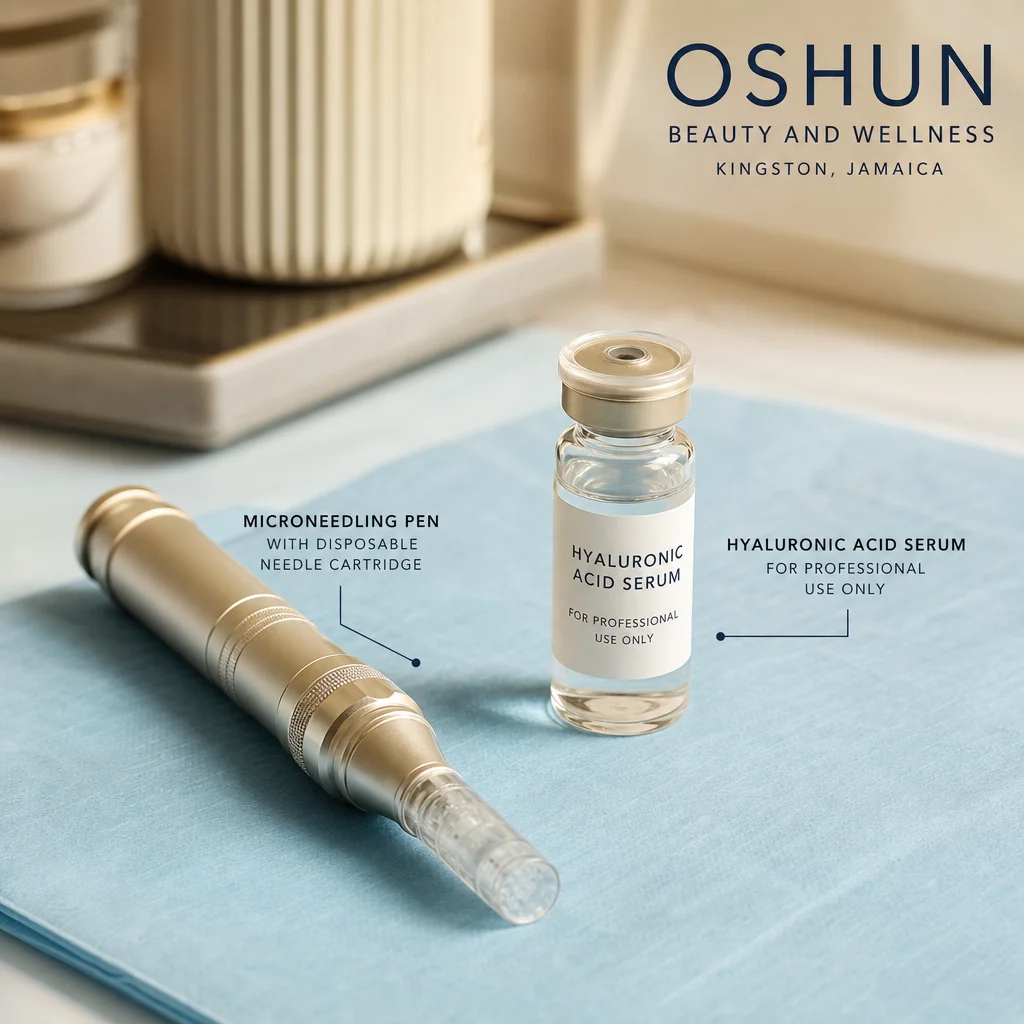
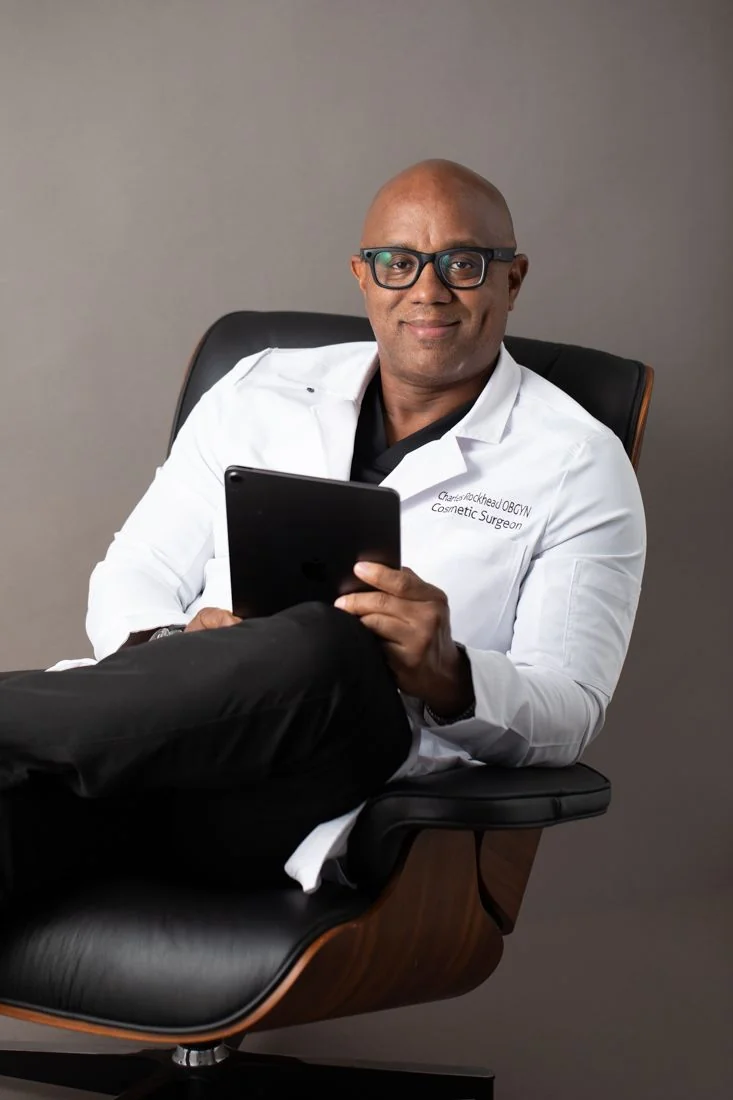
Microneedling at Oshun is performed by Dr. Charles Rockhead — fine sterile needles create controlled micro-channels that signal your skin to produce fresh collagen and elastin. No injectable, no downtime beyond 24 hours of pink. A series of three sessions four to six weeks apart builds the result.
No obligation · Every consultation is in-person with Dr. Rockhead.
Microneedling at a glance
Dr. Rockhead
Performs your procedure personally
In person
Consultation before anything is booked
In writing
Your quote, given at consultation
9 Devon Road
Kingston, Jamaica
No obligation
You decide after the consultation
WhatsApp
Questions answered privately
Every visit, without exception
Four things that are true of every visit
Care by an OB/GYN
Every procedure at Oshun is reviewed and led by a board-certified Obstetrician and Gynaecologist. Dr. Rockhead is a physician first — the same one who treats women's health on the other side of his practice.
30 years caring for women
Three decades as a practicing OB/GYN at Amadeo Medical Group, the parent clinical practice. Every Microneedling plan is reviewed by a physician who has cared for women through pregnancy, surgery, perimenopause, and post-natal recovery.
Written plan first
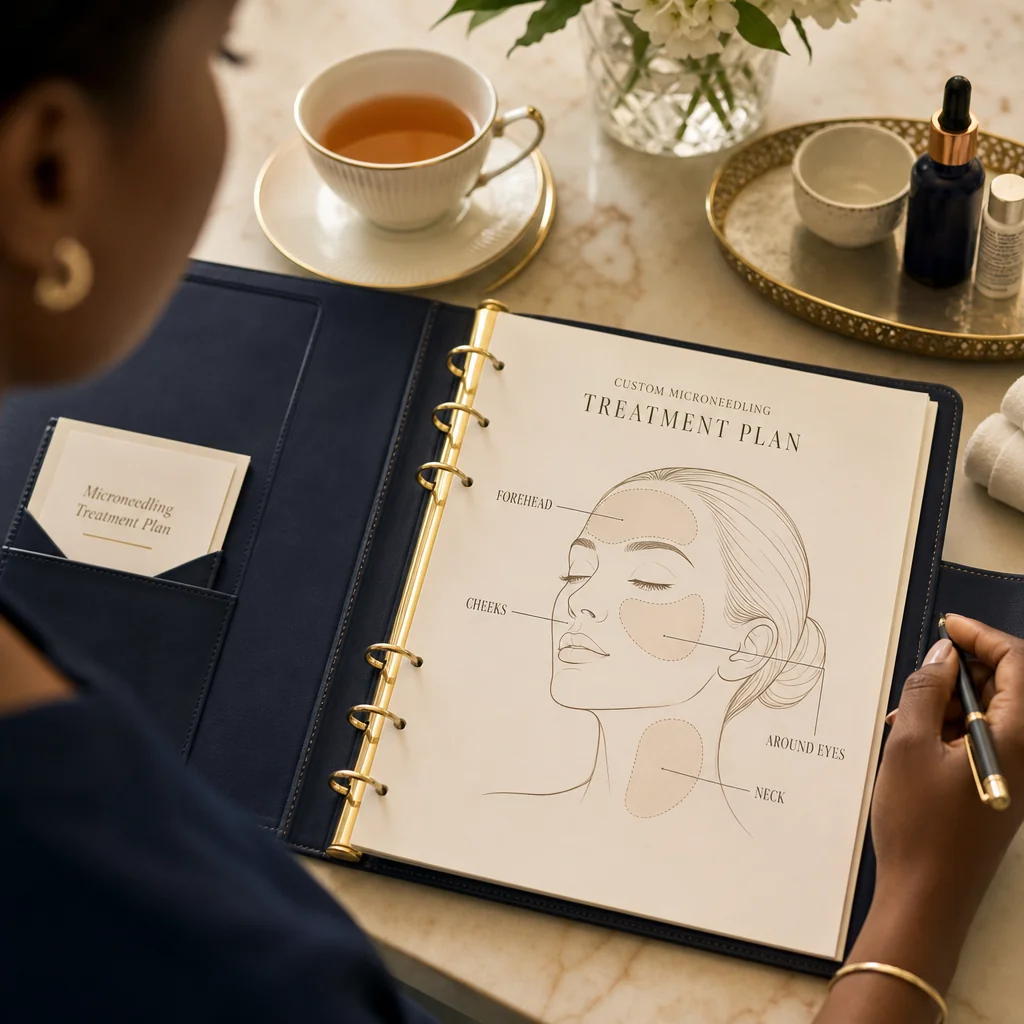
Every Microneedling patient leaves consultation with a written plan: areas, technique, timing, recovery, cost. Returning patients refine the same plan rather than starting from scratch every visit.
Conservative, considered
Oshun's approach favours conservative, considered care over aggressive intervention. Decisions are made in conversation with you, options are presented in plain language, and consent is informed at every step.
Treatment Details
Every fact about your first visit, in plain language.
Most first-time patients arrive with the same set of unspoken questions. They are answered below in the order most people think them — from "how much will I need" to "what if I'm pregnant."
Last clinically reviewed: · Medical reviewer: Dr. Charles Rockhead, Medical Director, Oshun Cosmetic Services
01Microneedling 101
The procedure itself.
Microneedling is a minimally-invasive skin procedure that uses fine sterile needles to create controlled micro-injuries in the dermis, triggering the body's natural collagen and elastin production. It is used to improve skin texture, fine lines, acne scarring, stretch marks, and overall skin quality.
How long it's been around
Microneedling has been used clinically since the mid-1990s; FDA-cleared device versions (such as SkinPen, the first FDA-cleared microneedling pen in 2018) have standardised sterile in-office delivery.
What we treat with it
Fine lines and early wrinkles, atrophic acne scarring (rolling/boxcar scars), enlarged pores, uneven texture, stretch marks, and dull skin tone. Microneedling is generally suitable for all Fitzpatrick skin types — including darker skin where laser resurfacing carries more pigmentation risk.
The honest version
Why microneedling sometimes disappoints.
Microneedling disappoints when sessions are spaced too closely, depth is too superficial, or aftercare destroys the collagen response.
Microneedling at home with a 0.25–0.5 mm roller and microneedling in a clinic with a 1.5–2.5 mm pen are different procedures. Home rolling stays in the epidermis — feels like exfoliation. Clinical microneedling reaches the dermis and triggers real collagen remodelling. Patients who try a roller and conclude microneedling doesn't work often haven't had the procedure done at clinical depth.
The other common failure mode is timing: running sessions too close together (under 4 weeks) doesn't allow the collagen build-up window to play out, and the visible result plateaus. Sun exposure, aggressive skincare in the days after, and skipping SPF for the following weeks all undo the collagen-building effect.
At Oshun, we don't run that model. Microneedling here is physician-led from consultation through follow-up, with a written plan in your hands and a follow-up visit on the calendar before you leave.
02Medical Leadership
The same physician, from first question to final follow-up.
Every Microneedling at Oshun is performed by Dr. Rockhead personally — never delegated to nurses, technicians, or junior injectors. The same physician who takes your medical history is the one who draws your blood, processes the PRP, places it, and sees you back at the week-4 and week-12 follow-ups. That single-hand continuity matters more in intimate-wellness procedures than almost anywhere else in cosmetic medicine.
Dr. Charles Rockhead, Medical Director — Oshun Cosmetic Services, Kingston.
Dr. Charles Rockhead
Medical Director · Board-Certified OB/GYN · 30+ years of practice
Dr. Charles Rockhead is a board-certified Obstetrician and Gynaecologist with more than thirty years of practice in Kingston. He is the Medical Director of Oshun Cosmetic Services and the founding physician of Amadeo Medical Group, the parent clinical practice.
A Microneedling visit at Oshun follows a clear sequence — from consultation through the procedure itself through follow-up. Here is what happens, step by step.
i.
Consultation
Before any Microneedling is scheduled, you meet Dr. Rockhead in person at 9 Devon Road. He reviews your medical history, examines you as appropriate, and explains the options — including the option not to proceed. You leave with a clear written plan and a quote.
ii.
Preparation
Avoid retinoids, exfoliating acids (AHAs/BHAs), and aggressive actives for 3–5 days before the session. Skip alcohol the day before to reduce flushing. Arrive with clean skin, no makeup.
iii.
The microneedling pass
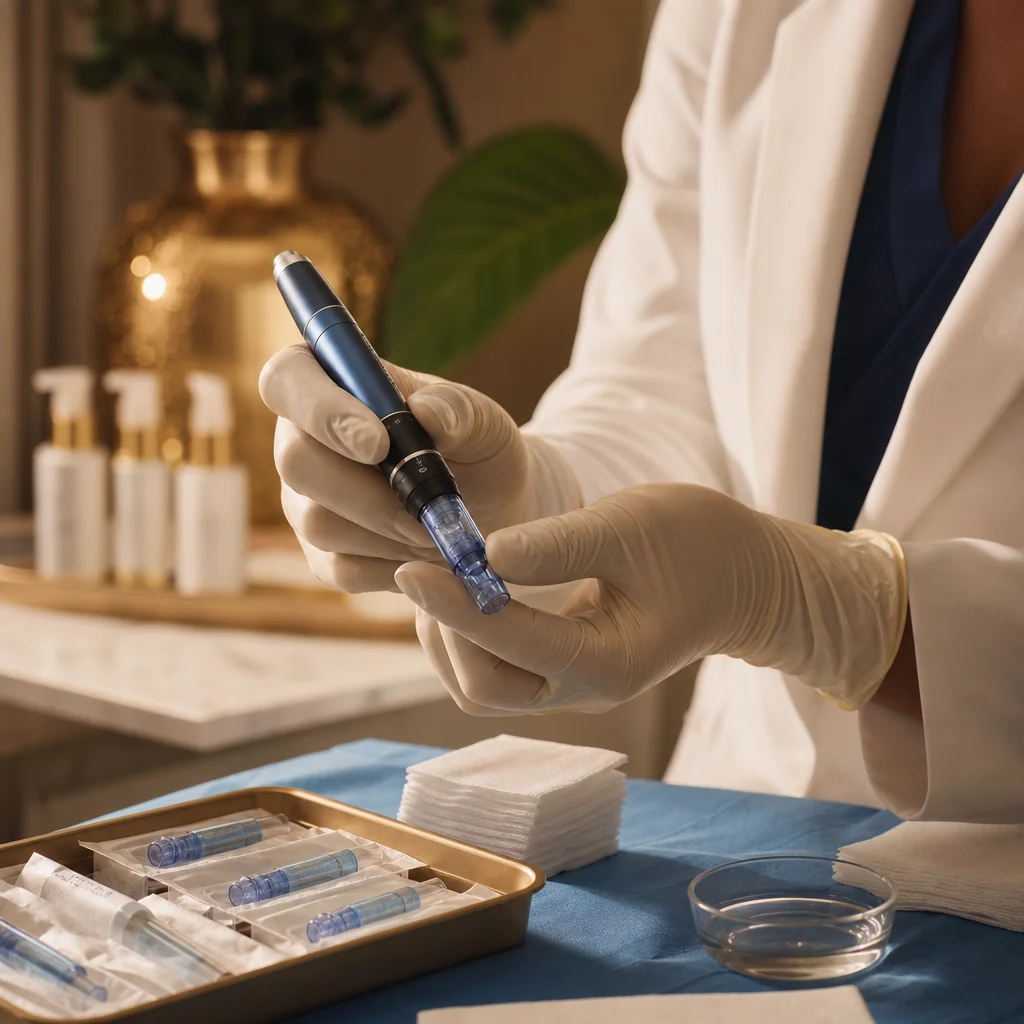
Dr. Rockhead moves the sterile microneedling pen across the treatment area in overlapping passes, adjusting depth by zone (forehead and cheeks tolerate deeper penetration than thinner areas around the eyes). A hyaluronic-acid serum is applied as a glide and stays on the skin afterwards. The session itself takes 20–30 minutes.
iv.
Recovery & follow-up
Avoid sun exposure, makeup, and active skincare for 24 hours. Use a gentle cleanser and a bland moisturiser only. SPF 30+ daily is essential during the weeks of collagen remodelling. We see you back about 4 weeks after each session to assess skin response and plan the next treatment. Final outcome review at 3 months after the last session.
How much you'll get
A small blood draw of about 30 ml (six teaspoons, roughly half a standard blood tube) is processed in our centrifuge to yield about 5–10 ml of concentrated PRP. That PRP is then placed across the three target zones at standardized depths. One session per visit; some patients add a second session 8–12 weeks later if they want to layer the effect.
Will it hurt?
A topical numbing cream is applied 30–45 minutes before the treatment so the skin is desensitised. Most patients describe the procedure as a mild prickling or warmth. No injectable anaesthetic is required.
How long the visit takes
Plan for about 60–90 minutes total: 30–45 minutes for the numbing cream to take effect, 20–30 minutes for the treatment itself, then a few minutes for post-procedure soothing.
Time off after
Expect mild redness and a sunburn-like flush for 24–48 hours. Light makeup can be applied after 24 hours. Most patients return to work the next day; some prefer the same evening.
04Results & aftercare
Recovery and follow-up.
Initial glow is visible within a week. Real textural change — the collagen remodelling — builds over 4–6 weeks after each session and continues for months. Full course results are typically evaluated at 3 months after the final treatment.
The days before your visit
Avoid retinoids, exfoliating acids (AHAs/BHAs), and aggressive actives for 3–5 days before the session. Skip alcohol the day before to reduce flushing. Arrive with clean skin, no makeup.
Right after your visit
Avoid sun exposure, makeup, and active skincare for 24 hours. Use a gentle cleanser and a bland moisturiser only. SPF 30+ daily is essential during the weeks of collagen remodelling.
Follow-up window
We see you back at the four-week and twelve-week marks to assess response. Some patients respond strongly to one session; some benefit from a second placement at the 8–12 week mark to layer the effect. If a second session is added it is billed at the standard per-session rate — there are no "free" follow-up injections because that pricing structure encourages under-treatment on the first visit.
05Is Microneedling right for you
Who gets the most out of Microneedling at Oshun.
Who should not have the Microneedling
Active acne flare or infection at the treatment site, isotretinoin use within the past 6 months, history of keloid scarring, active eczema or psoriasis in the area, blood-thinning medication that cannot be paused, pregnancy (relative), and uncontrolled diabetes.
Microneedling isn't a one-size category — the right approach depends on your specific situation. Below are common patient profiles we see. If one sounds like you, an in-person consultation at 9 Devon Road is the next step.
Acne scarring
Rolling and boxcar acne scarring
Microneedling at clinical depth is the most evidence-supported treatment for atrophic acne scars in darker skin types — where laser resurfacing carries pigmentation risk. A 4–6 session course over 6 months is the typical plan, with results evaluated 3 months after the final session.
Skin texture
Pores, fine lines, and texture in the late 20s onward
Patients who feel their skin looks rougher or duller than it used to — without a single specific concern — often respond well to a 3-session microneedling course. The win is the cumulative collagen build, not a single dramatic session.
Stretch marks
Newer (red/purple) stretch marks
Stretch marks respond better to microneedling when they're still in the red/purple phase (under 12 months old). Older silver marks are harder to remodel. The 6-session course on abdomen, thighs, or arms is the standard plan.
Pre-event prep
A glow course before a big event
Patients planning a wedding or major event 4–6 months out often book a 3-session microneedling course timed so the final session lands 6–8 weeks before the date. By then post-treatment redness is gone and the collagen-driven glow is at its peak.
06Logistics, cost & safety
Booking and pricing.
Consultation policy
Every Microneedling patient meets Dr. Rockhead in person at the 9 Devon Road clinic before any procedure is scheduled. (Virtual consultations are not currently offered.)
Where treatments happen
Microneedling is performed in the procedure room at Oshun, 9 Devon Road, Kingston.
What it costs
Microneedling at Oshun is priced per session, with a multi-session package available. The written quote at consultation reflects the area treated and the number of sessions in the plan.
How to pay
Cash, debit, credit card, or approved financing.
Insurance
Microneedling is cosmetic and not covered by insurance.
If this sounds right
The next step is a conversation, not a commitment.
Every Microneedling patient at Oshun starts with a consultation. Twenty minutes, in-person at 9 Devon Road, with Dr. Rockhead. No blood is drawn, no quote is signed, no pressure either way. You leave with a plan and a price — or you leave with neither.
No obligation · Every consultation is in-person with Dr. Rockhead.
The honest answers
Nine questions every nervous first-timer asks.
Open any of them. We've written each answer the way Dr. Rockhead would actually say it — not the way a brochure would.
Does microneedling hurt?
With topical numbing cream applied 30–45 minutes beforehand, most patients describe microneedling as a mild prickling or warm sensation rather than pain. The forehead and bony areas feel slightly more intense than the cheeks.
How many microneedling sessions will I need?
Most concerns respond best to 3–6 sessions spaced 4–6 weeks apart. Acne scarring typically requires the longer course; general skin quality is often closer to 3 sessions. The exact plan is written at consultation.
Is microneedling safe for darker skin types?
Yes — microneedling is one of the safer collagen-induction options for Fitzpatrick types IV–VI because it does not rely on selective heat or light absorption that risks post-inflammatory hyperpigmentation. It is often preferred over laser resurfacing in darker skin.
How long is the recovery after microneedling?
Expect a sunburn-like redness and mild swelling for 24–48 hours. Light makeup after 24 hours; most patients return to work the next day. No prolonged downtime.
Can I combine microneedling with other treatments?
Microneedling combines well with PRP (microneedling-with-PRP, the "Vampire Facial") and with hyaluronic-acid serum infusion. Dr. Rockhead reviews other planned treatments at consultation.
How soon will I see results from microneedling?
Initial glow within a week, but real collagen-driven textural change builds over 4–6 weeks per session. Full-course outcomes evaluated 3 months after the final session.
What are the risks of microneedling?
Temporary redness and pinpoint bleeding, infection if aftercare is poor, and reactivation of cold sores (HSV) in susceptible patients. Rare: post-inflammatory pigmentation, scarring with overly aggressive depth, and allergic reaction to topical serums. Dr. Rockhead reviews your full skin history at consultation.
Is microneedling worth it for fine lines?
For fine lines, microneedling produces gradual textural improvement rather than the line-erasure that injectables produce. Patients seeking a non-injectable approach often choose microneedling; targeted line correction may be better suited to injectables. Both can be combined.
How do I book microneedling at Oshun?
Booking is a two-step process: a private consultation first to plan the session count and depth, then scheduling of the first session. WhatsApp (876) 676-6297 or schedule a consultation from this page.
Often considered alongside
Three treatments patients ask about in the same conversation.
Most patients land on this page weighing whether the Microneedling is worth doing at all. The consultation tells you. Twenty minutes with Dr. Rockhead at 9 Devon Road, a written quote in your hands, and a real answer about whether this is the right next step for you — with no obligation either way.